
For
UK
audiences
The professional's guide to product selection
The professional's guide to product selection
For the prophylaxis and treatment of asthma by inhalation of powder
• Child 5-11 years: 100–200 mcg twice daily, dose to be adjusted as necessary.
• Child 12–17 years: 200–400 mcg twice daily; increased if necessary up to 800 mcg twice daily, dose to be adjusted as necessary.
• Adult: 200–400 mcg twice daily; increased if necessary up to 800 mcg twice daily, dose to be adjusted as necessary.
For the prophylaxis and treatment of allergic and vasomotor rhinitis
• Over 6 years: 100 mcg twice daily, dose to be administered into each nostril. Maximum of 400 mcg per day. Reduce to 50 mcg twice daily if symptoms are controlled.
For the prophylaxis of asthma.
For prophylaxis and treatment of allergic and vasomotor rhinitis.
Should be used with caution in hepatic and renal impairment.
Nasal spray
Nasal spray
50 mcg per dose, 200 doses
For the prophylaxis of asthma.
• Over 12 years: 160 micrograms once daily; reduced to 80 micrograms once daily, if control maintained; increased if necessary up to 320 micrograms twice daily, in severe asthma.
Budelin Novoliser for prophylaxis of asthma by inhalation of powder
• Adult: 200–800 mcg twice daily
Budelin Novoliser as an alternative in mild to moderate asthma by inhalation of powder, for patients previously stabilised on a twice-daily dose
• Adult: 200–400 mcg once daily to be taken in the evening. Maximum per dose 800 mcg.
For allergic rhinitis
• Over 12 years: one spray twice daily, dose to be administered into each nostril.
For the treatment of anaphylaxis and asthma.
By intravenous injection for acute hypersensitivity reactions
• Adult: 100–300 mg, to be administered as sodium succinate.
By intramuscular injection, or by intravenous injection for acute hypersensitivity reactions
• Child 1–5 months: initially 25 mg three times a day, adjust according to response.
• Child 6 months–5 years: initially 50 mg three times a day, adjust according to response.
• Child 6–11 years: initially 100 mg three times a day, adjust according to response.
• Child 12–17 years: initially 200 mg three times a day, adjust according to response.
By intravenous injection for severe acute asthma
• Child 1 month–1 year: 4 mg/kg every six hours. Maximum per dose 100 mg. Alternatively 25 mg every six hours until conversion to oral prednisolone. Preferably administer as sodium succinate.
• Child 2–4 years: 4 mg/kg every six hours. Maximum per dose 100 mg. Alternatively 50 mg every six hours until conversion to oral prednisolone. Preferably administer as sodium succinate.
• Child 5–11 years: 4 mg/kg every six hours. Maximum per dose 100 mg. Alternatively 100 mg every six hours until conversion to oral prednisolone. Preferably administer as sodium succinate.
• Child 12–17 years: 4 mg/kg every six hours. Maximum per dose 100 mg. Alternatively 100 mg every six hours until conversion to oral prednisolone. Preferably administer as sodium succinate.
• Adult: 100 mg every six hours until conversion to oral prednisolone. Preferably administer as sodium succinate.
For the treatment of anaphylaxis and asthma.
By intravenous injection for acute hypersensitivity reactions
• Adult: 100–300 mg, to be administered as sodium succinate.
By intramuscular injection, or by intravenous injection for acute hypersensitivity reactions
• Child 1–5 months: initially 25 mg three times a day, adjust according to response.
• Child 6 months–5 years: initially 50 mg three times a day, adjust according to response.
• Child 6–11 years: initially 100 mg three times a day, adjust according to response.
• Child 12–17 years: initially 200 mg three times a day, adjust according to response.
By intravenous injection for severe acute asthma
• Child 1 month–1 year: 4 mg/kg every six hours. Maximum per dose 100 mg. Alternatively 25 mg every six hours until conversion to oral prednisolone. Preferably administer as sodium succinate.
• Child 2–4 years: 4 mg/kg every six hours. Maximum per dose 100 mg. Alternatively 50 mg every six hours until conversion to oral prednisolone. Preferably administer as sodium succinate.
• Child 5–11 years: 4 mg/kg every six hours. Maximum per dose 100 mg. Alternatively 100 mg every six hours until conversion to oral prednisolone. Preferably administer as sodium succinate.
• Child 12–17 years: 4 mg/kg every six hours. Maximum per dose 100 mg. Alternatively 100 mg every six hours until conversion to oral prednisolone. Preferably administer as sodium succinate.
• Adult: 100 mg every six hours until conversion to oral prednisolone. Preferably administer as sodium succinate.
By mouth for acute exacerbation of chronic obstructive pulmonary disease
• Adult: 30 mg daily for 7–14 days.
By mouth for severe croup or mild croup that might cause complications (before transfer to hospital)
• Child: 1–2 mg/kg.
By mouth for mild to moderate acute asthma or severe or life-threatening asthma when oral corticosteroids have been taken for a few days
• Child 1 month–11 years: 2 mg/kg once daily (maximum dose 60 mg) for up to three days, longer if necessary.
By mouth for mild to moderate acute asthma or severe or life-threatening asthma
• Child 1 month–11 years: 1–2 mg/kg once daily (maximum dose 40 mg) for up to three days, longer if necessary.
• Over 12 years: 40–50 mg daily for at least five days.
By mouth for suppression of inflammatory and allergic disorders
• Adult: initially 10–20 mg daily, preferably taken in the morning after food. Can often be reduced after a few days but may need to be continued for a few weeks or months. Maintenance 2.5–15 mg daily. Cushingoid side-effects increase in likelihood with doses of over 7.5 mg daily.
By mouth for suppression of inflammatory and allergic disorders (initial dose in severe disease)
• Adult: initially up to 60 mg daily, dose preferably taken in the morning after food. Can often be reduced within a few days but may need to be continued for a few weeks or months.
By mouth for Covid-19 requiring supplementary oxygen
• Adult: 40 mg daily, for 10 days or until the day of discharge, whichever is sooner.
For the prophylaxis and treatment of allergic and vasomotor rhinitis by intranasal administration
• Over 6 years: 100 mcg twice daily, dose to be administered into each nostril. Maximum of 400 mcg per day. Reduce if symptoms are controlled.
For the prophylaxis and treatment of asthma by inhalation of powder
• Child 5-11 years: 100–200 mcg twice daily, dose to be adjusted as necessary.
• Child 12–17 years: 200–400 mcg twice daily; increased if necessary up to 800 mcg twice daily, dose to be adjusted as necessary.
• Adult: 200–400 mcg twice daily; increased if necessary up to 800 mcg twice daily, dose to be adjusted as necessary.
For the prophylaxis and treatment of allergic and vasomotor rhinitis
• Over 6 years: 100 mcg twice daily, dose to be administered into each nostril. Maximum of 400 mcg per day. Reduce to 50 mcg twice daily if symptoms are controlled.
For prophylaxis of asthma by inhalation of aerosol
• Child 2–11 years: 100–200 mcg twice daily.
• Over 12 years: 200–400 mcg twice daily, increased if necessary up to 1 mg twice daily. Adjust according to response.
For prophylaxis of asthma by inhalation of aerosol. Kelhale has extra-fine particles and is more potent than traditional beclomethasone diproprionate inhalers.
• Adult: 50–200 mcg twice daily, increased if necessary to 400 mcg twice daily
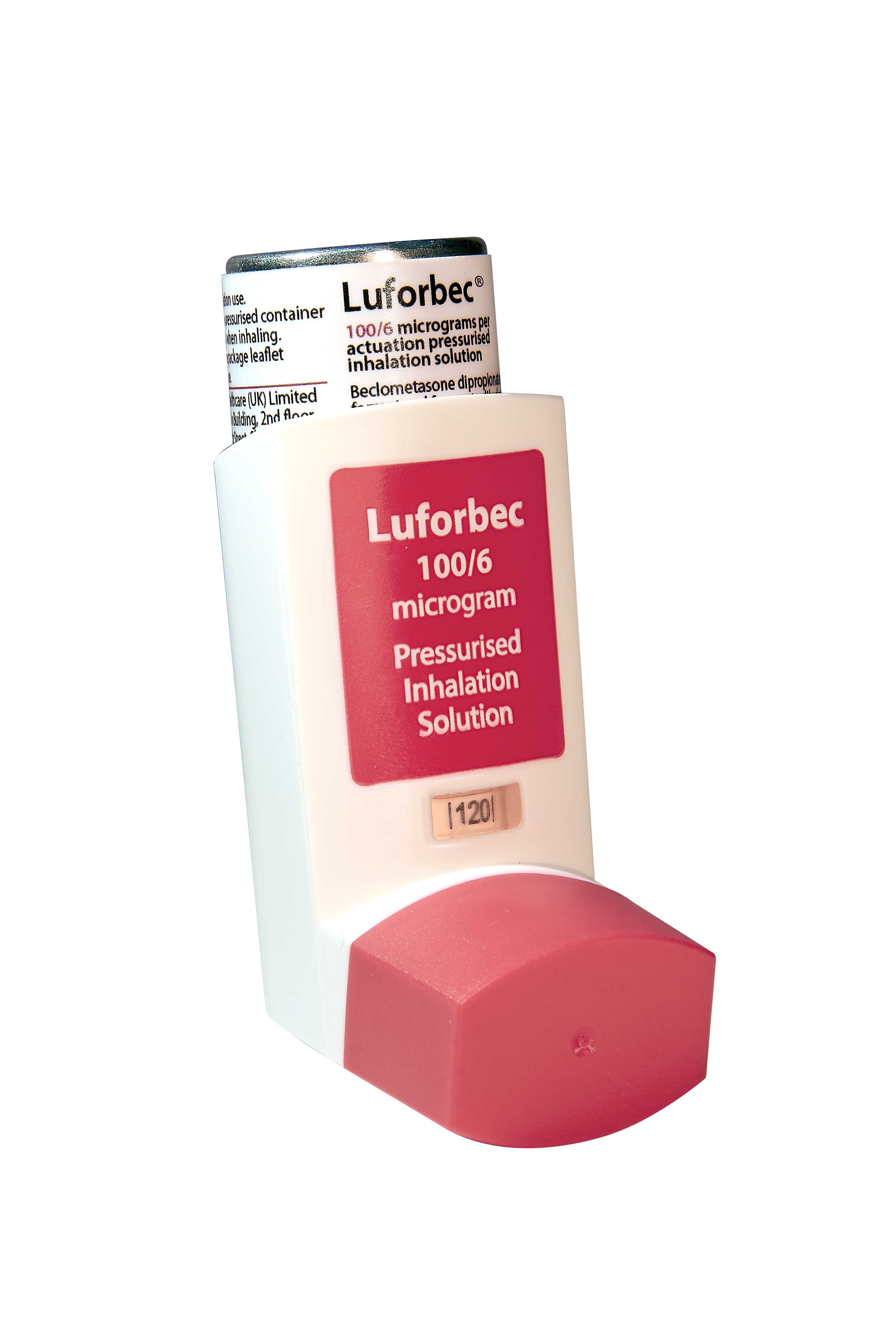
Long-acting selective beta2 agonist with corticosteroid.
Asthma maintenance therapy for Luforbec® 100/6 by inhalation of aerosol
Adult: 1–2 inhalations twice daily; maximum 4 inhalations per day.
Asthma, maintenance and reliever therapy for Luforbec® 100/6 by inhalation of aerosol
Adult: 1 inhalation twice daily; 1 inhalation as required, for relief of symptoms; maximum 8 inhalations per day.
Chronic obstructive pulmonary disease with forced expiratory volume in 1 second < 50% of predicted for Luforbec® 100/6 by inhalation of aerosol
Adult: 2 inhalations twice daily.
Asthma maintenance therapy for Luforbec® 200/6 by inhalation of aerosol
Adult: 2 inhalations twice daily, maximum 4 inhalations per day.
Children and adolescents aged less than 18 years must not take this medicine
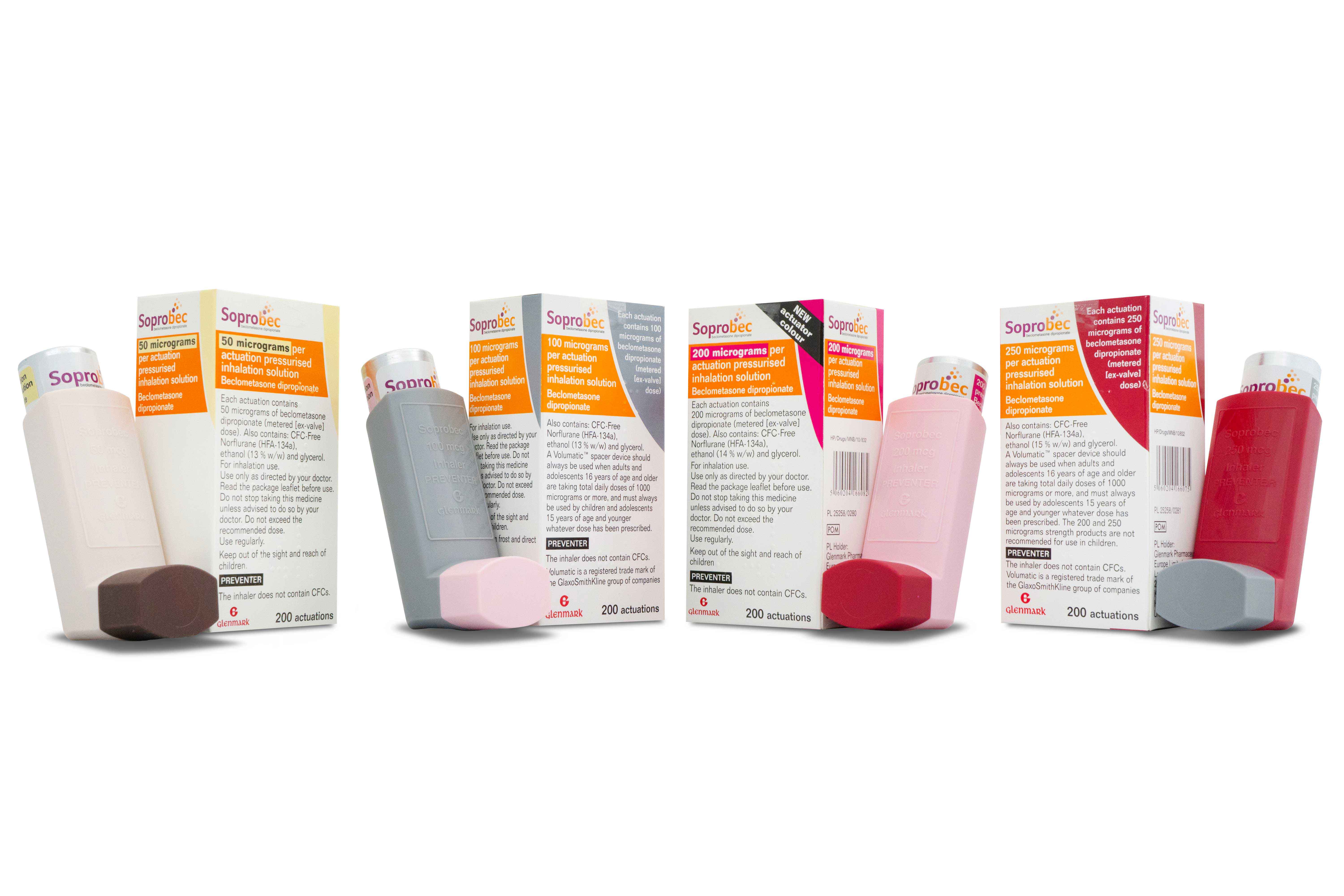
Soprobec is indicated for the maintenance treatment of asthma, when the use of pressurised metered dose inhaler is appropriate.
Prophylaxis and treatment of allergic rhinitis and nasal polyps by intranasal administration
• Over 6 years: 256 mcg once daily, to be administered as 2 sprays into each nostril in the morning, reduce dose when control achieved. Alternatively, 128 mcg twice daily, to be administered as 1 spray into each nostril in the morning and in the evening, reduce dose when control achieved.
Prophylaxis of asthma by nebulised suspension
• Child 6 months–11 years: 125–500 mcg twice daily, dose to be adjusted as required. Maximum 2 mg per day.
• Over 12 years: initially 0.25–1 mg twice daily, dose to be adjusted as required. Maximum 2 mg per day.
Prophylaxis and treatment of allergic rhinitis and nasal polyps by intranasal administration
• Over 6 years: 256 mcg once daily, to be administered as 2 sprays into each nostril in the morning, reduce dose when control achieved. Alternatively, 128 mcg twice daily, to be administered as 1 spray into each nostril in the morning and in the evening, reduce dose when control achieved.
Prophylaxis of asthma by nebulised suspension
• Child 6 months–11 years: 125–500 mcg twice daily, dose to be adjusted as required. Maximum 2 mg per day.
• Over 12 years: initially 0.25–1 mg twice daily, dose to be adjusted as required. Maximum 2 mg per day.
Prophylaxis of mild to moderate asthma by inhalation of powder
• Child 6 months–11 years: 200–400 micrograms once daily, dose to be given in the evening.
• Over 12 years: 200–400 micrograms once daily (max. per dose 800 micrograms), dose to be given in the evening.
Prophylaxis of asthma by inhalation of powder
• Child 6 months–11 years: 100–400 micrograms twice daily, dose to be adjusted as necessary.
• Over 12 years: 100–800 micrograms twice daily, dose to be adjusted as necessary.
Prophylaxis as treatment of allergic and vasomotor rhinitis by intranasal administration
• Child 6-17 years: 256 micrograms once daily, to be administered as 2 sprays into each nostril in the morning, reduce dose when control achieved, alternatively 128 micrograms twice daily, to be administered as 1 spray into each nostril in the morning and in the evening, reduce dose when control achieved.
• Adult: 256 micrograms once daily, to be administered as 2 sprays into each nostril in the morning, reduce dose when control achieved, alternatively 128 micrograms twice daily, to be administered as 1 spray into each nostril in the morning and in the evening, reduce dose when control achieved.
For allergic rhinitis
• Over 12 years: one spray twice daily, dose to be administered into each nostril.
Prophylaxis and treatment of allergic rhinitis by intranasal administration
• Child 3–11 years: 50 mcg daily, dose into each nostril.
• Over 12 years: 100 mcg daily, increased if necessary up to 200 mcg daily, dose into each nostril. Reduce to 50 mcg daily when controlled.
Management of nasal polyps by intranasal administration
• Adult: initially 100 mcg daily for five to six weeks, dose into each nostril, then increased if necessary to 100 mcg twice daily. Consider alternative if no improvement after five to six weeks. Reduce when controlled.
Prophylaxis and treatment of allergic rhinitis by intranasal administration
• Child 3–11 years: 50 mcg daily, dose into each nostril.
• Over 12 years: 100 mcg daily, increased if necessary up to 200 mcg daily, dose into each nostril. Reduce to 50 mcg daily when controlled.
Management of nasal polyps by intranasal administration
• Adult: initially 100 mcg daily for five to six weeks, dose into each nostril, then increased if necessary to 100 mcg twice daily. Consider alternative if no improvement after five to six weeks. Reduce when controlled.
Prophylaxis and treatment of allergic rhinitis by intranasal administration
• Child 3–11 years: 50 mcg daily, dose into each nostril.
• Over 12 years: 100 mcg daily, increased if necessary up to 200 mcg daily, dose into each nostril. Reduce to 50 mcg daily when controlled.
Management of nasal polyps by intranasal administration
• Adult: initially 100 mcg daily for five to six weeks, dose into each nostril, then increased if necessary to 100 mcg twice daily. Consider alternative if no improvement after five to six weeks. Reduce when controlled.
Prophylaxis and treatment of allergic rhinitis and nasal polyps by intranasal administration
• Over 6 years: 256 mcg once daily, to be administered as 2 sprays into each nostril in the morning, reduce dose when control achieved. Alternatively, 128 mcg twice daily, to be administered as 1 spray into each nostril in the morning and in the evening, reduce dose when control achieved.
Prophylaxis of asthma by nebulised suspension
• Child 6 months–11 years: 125–500 mcg twice daily, dose to be adjusted as required. Maximum 2 mg per day.
• Over 12 years: initially 0.25–1 mg twice daily, dose to be adjusted as required. Maximum 2 mg per day.
Prophylaxis and treatment of allergic rhinitis and nasal polyps by intranasal administration
• Over 6 years: 256 mcg once daily, to be administered as 2 sprays into each nostril in the morning, reduce dose when control achieved. Alternatively, 128 mcg twice daily, to be administered as 1 spray into each nostril in the morning and in the evening, reduce dose when control achieved.
Prophylaxis of asthma by nebulised suspension
• Child 6 months–11 years: 125–500 mcg twice daily, dose to be adjusted as required. Maximum 2 mg per day.
• Over 12 years: initially 0.25–1 mg twice daily, dose to be adjusted as required. Maximum 2 mg per day.
Prophylaxis of mild to moderate asthma by inhalation of powder
• Child 6 months–11 years: 200–400 micrograms once daily, dose to be given in the evening.
• Over 12 years: 200–400 micrograms once daily (max. per dose 800 micrograms), dose to be given in the evening.
Prophylaxis of asthma by inhalation of powder
• Child 6 months–11 years: 100–400 micrograms twice daily, dose to be adjusted as necessary.
• Over 12 years: 100–800 micrograms twice daily, dose to be adjusted as necessary.
Prophylaxis as treatment of allergic and vasomotor rhinitis by intranasal administration
• Child 6-17 years: 256 micrograms once daily, to be administered as 2 sprays into each nostril in the morning, reduce dose when control achieved, alternatively 128 micrograms twice daily, to be administered as 1 spray into each nostril in the morning and in the evening, reduce dose when control achieved.
• Adult: 256 micrograms once daily, to be administered as 2 sprays into each nostril in the morning, reduce dose when control achieved, alternatively 128 micrograms twice daily, to be administered as 1 spray into each nostril in the morning and in the evening, reduce dose when control achieved.
For allergic rhinitis
• Over 12 years: one spray twice daily, dose to be administered into each nostril.
Prophylaxis and treatment of allergic rhinitis by intranasal administration
• Child 3–11 years: 50 mcg daily, dose into each nostril.
• Over 12 years: 100 mcg daily, increased if necessary up to 200 mcg daily, dose into each nostril. Reduce to 50 mcg daily when controlled.
Management of nasal polyps by intranasal administration
• Adult: initially 100 mcg daily for five to six weeks, dose into each nostril, then increased if necessary to 100 mcg twice daily. Consider alternative if no improvement after five to six weeks. Reduce when controlled.
Prophylaxis and treatment of allergic rhinitis by intranasal administration
• Child 3–11 years: 50 mcg daily, dose into each nostril.
• Over 12 years: 100 mcg daily, increased if necessary up to 200 mcg daily, dose into each nostril. Reduce to 50 mcg daily when controlled.
Management of nasal polyps by intranasal administration
• Adult: initially 100 mcg daily for five to six weeks, dose into each nostril, then increased if necessary to 100 mcg twice daily. Consider alternative if no improvement after five to six weeks. Reduce when controlled.
Prophylaxis and treatment of allergic rhinitis by intranasal administration
• Child 3–11 years: 50 mcg daily, dose into each nostril.
• Over 12 years: 100 mcg daily, increased if necessary up to 200 mcg daily, dose into each nostril. Reduce to 50 mcg daily when controlled.
Management of nasal polyps by intranasal administration
• Adult: initially 100 mcg daily for five to six weeks, dose into each nostril, then increased if necessary to 100 mcg twice daily. Consider alternative if no improvement after five to six weeks. Reduce when controlled.