
For
UK
audiences
The professional's guide to product selection
The professional's guide to product selection
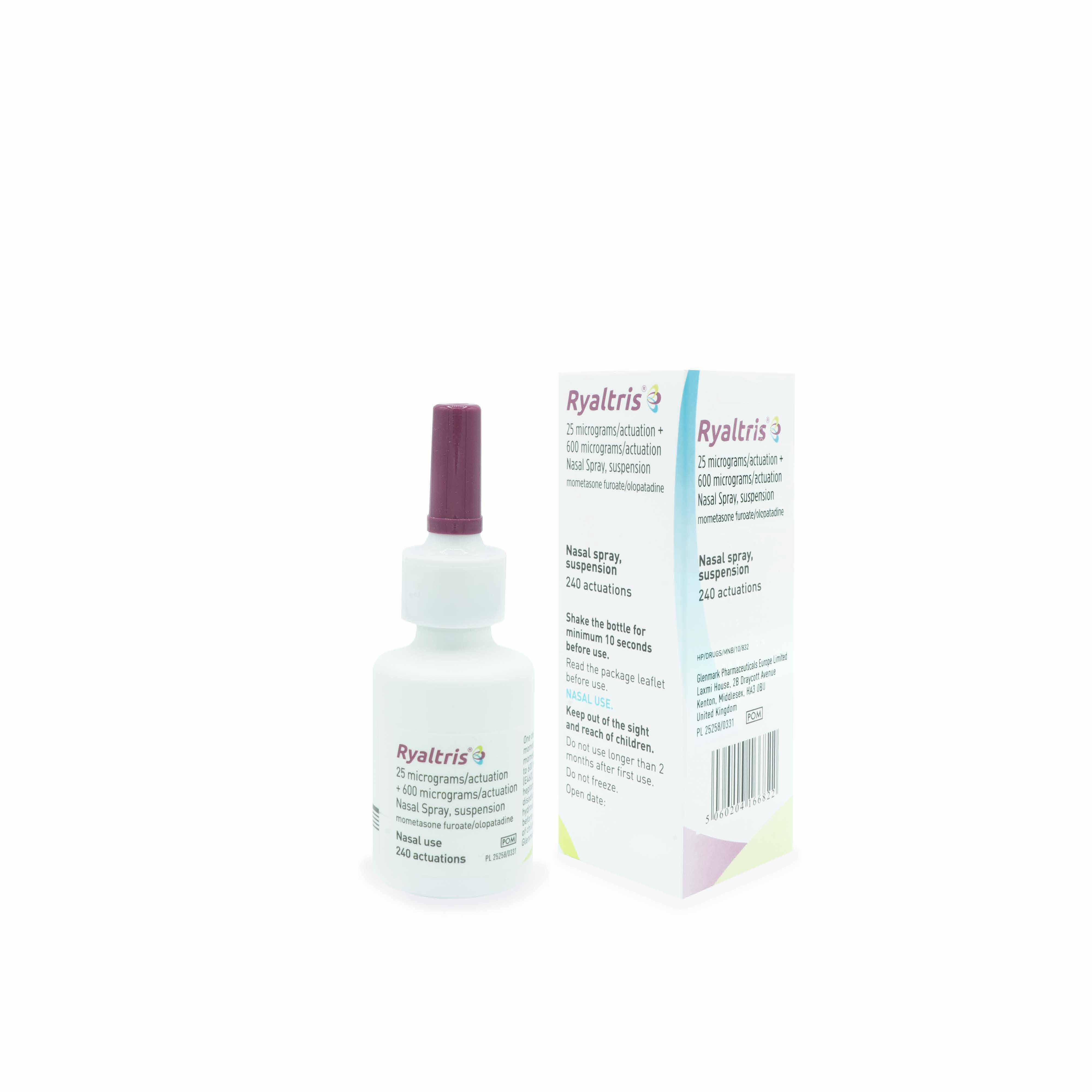
For treatment of moderate to severe nasal symptoms associated with allergic rhinitis in adults and adolescents of 12 years of age and older.
For treatment of moderate to severe nasal symptoms associated with allergic rhinitis.
Spray
Ryaltris 25 mcg/ 600 mcg per actuation, 240 doses per bottle
Prophylaxis and treatment of allergic rhinitis and nasal polyps by intranasal administration
• Over 6 years: 256 mcg once daily, to be administered as 2 sprays into each nostril in the morning, reduce dose when control achieved. Alternatively, 128 mcg twice daily, to be administered as 1 spray into each nostril in the morning and in the evening, reduce dose when control achieved.
Prophylaxis of asthma by nebulised suspension
• Child 6 months–11 years: 125–500 mcg twice daily, dose to be adjusted as required. Maximum 2 mg per day.
• Over 12 years: initially 0.25–1 mg twice daily, dose to be adjusted as required. Maximum 2 mg per day.
Prophylaxis and treatment of allergic rhinitis and nasal polyps by intranasal administration
• Over 6 years: 256 mcg once daily, to be administered as 2 sprays into each nostril in the morning, reduce dose when control achieved. Alternatively, 128 mcg twice daily, to be administered as 1 spray into each nostril in the morning and in the evening, reduce dose when control achieved.
Prophylaxis of asthma by nebulised suspension
• Child 6 months–11 years: 125–500 mcg twice daily, dose to be adjusted as required. Maximum 2 mg per day.
• Over 12 years: initially 0.25–1 mg twice daily, dose to be adjusted as required. Maximum 2 mg per day.
Prophylaxis of mild to moderate asthma by inhalation of powder
• Child 6 months–11 years: 200–400 micrograms once daily, dose to be given in the evening.
• Over 12 years: 200–400 micrograms once daily (max. per dose 800 micrograms), dose to be given in the evening.
Prophylaxis of asthma by inhalation of powder
• Child 6 months–11 years: 100–400 micrograms twice daily, dose to be adjusted as necessary.
• Over 12 years: 100–800 micrograms twice daily, dose to be adjusted as necessary.
Prophylaxis as treatment of allergic and vasomotor rhinitis by intranasal administration
• Child 6-17 years: 256 micrograms once daily, to be administered as 2 sprays into each nostril in the morning, reduce dose when control achieved, alternatively 128 micrograms twice daily, to be administered as 1 spray into each nostril in the morning and in the evening, reduce dose when control achieved.
• Adult: 256 micrograms once daily, to be administered as 2 sprays into each nostril in the morning, reduce dose when control achieved, alternatively 128 micrograms twice daily, to be administered as 1 spray into each nostril in the morning and in the evening, reduce dose when control achieved.
For allergic rhinitis
• Over 12 years: one spray twice daily, dose to be administered into each nostril.
Prophylaxis and treatment of allergic rhinitis by intranasal administration
• Child 3–11 years: 50 mcg daily, dose into each nostril.
• Over 12 years: 100 mcg daily, increased if necessary up to 200 mcg daily, dose into each nostril. Reduce to 50 mcg daily when controlled.
Management of nasal polyps by intranasal administration
• Adult: initially 100 mcg daily for five to six weeks, dose into each nostril, then increased if necessary to 100 mcg twice daily. Consider alternative if no improvement after five to six weeks. Reduce when controlled.
Prophylaxis and treatment of allergic rhinitis by intranasal administration
• Child 3–11 years: 50 mcg daily, dose into each nostril.
• Over 12 years: 100 mcg daily, increased if necessary up to 200 mcg daily, dose into each nostril. Reduce to 50 mcg daily when controlled.
Management of nasal polyps by intranasal administration
• Adult: initially 100 mcg daily for five to six weeks, dose into each nostril, then increased if necessary to 100 mcg twice daily. Consider alternative if no improvement after five to six weeks. Reduce when controlled.
Prophylaxis and treatment of allergic rhinitis by intranasal administration
• Child 3–11 years: 50 mcg daily, dose into each nostril.
• Over 12 years: 100 mcg daily, increased if necessary up to 200 mcg daily, dose into each nostril. Reduce to 50 mcg daily when controlled.
Management of nasal polyps by intranasal administration
• Adult: initially 100 mcg daily for five to six weeks, dose into each nostril, then increased if necessary to 100 mcg twice daily. Consider alternative if no improvement after five to six weeks. Reduce when controlled.
Prophylaxis and treatment of allergic rhinitis and nasal polyps by intranasal administration
• Over 6 years: 256 mcg once daily, to be administered as 2 sprays into each nostril in the morning, reduce dose when control achieved. Alternatively, 128 mcg twice daily, to be administered as 1 spray into each nostril in the morning and in the evening, reduce dose when control achieved.
Prophylaxis of asthma by nebulised suspension
• Child 6 months–11 years: 125–500 mcg twice daily, dose to be adjusted as required. Maximum 2 mg per day.
• Over 12 years: initially 0.25–1 mg twice daily, dose to be adjusted as required. Maximum 2 mg per day.
Prophylaxis and treatment of allergic rhinitis and nasal polyps by intranasal administration
• Over 6 years: 256 mcg once daily, to be administered as 2 sprays into each nostril in the morning, reduce dose when control achieved. Alternatively, 128 mcg twice daily, to be administered as 1 spray into each nostril in the morning and in the evening, reduce dose when control achieved.
Prophylaxis of asthma by nebulised suspension
• Child 6 months–11 years: 125–500 mcg twice daily, dose to be adjusted as required. Maximum 2 mg per day.
• Over 12 years: initially 0.25–1 mg twice daily, dose to be adjusted as required. Maximum 2 mg per day.
Prophylaxis of mild to moderate asthma by inhalation of powder
• Child 6 months–11 years: 200–400 micrograms once daily, dose to be given in the evening.
• Over 12 years: 200–400 micrograms once daily (max. per dose 800 micrograms), dose to be given in the evening.
Prophylaxis of asthma by inhalation of powder
• Child 6 months–11 years: 100–400 micrograms twice daily, dose to be adjusted as necessary.
• Over 12 years: 100–800 micrograms twice daily, dose to be adjusted as necessary.
Prophylaxis as treatment of allergic and vasomotor rhinitis by intranasal administration
• Child 6-17 years: 256 micrograms once daily, to be administered as 2 sprays into each nostril in the morning, reduce dose when control achieved, alternatively 128 micrograms twice daily, to be administered as 1 spray into each nostril in the morning and in the evening, reduce dose when control achieved.
• Adult: 256 micrograms once daily, to be administered as 2 sprays into each nostril in the morning, reduce dose when control achieved, alternatively 128 micrograms twice daily, to be administered as 1 spray into each nostril in the morning and in the evening, reduce dose when control achieved.
For allergic rhinitis
• Over 12 years: one spray twice daily, dose to be administered into each nostril.
Prophylaxis and treatment of allergic rhinitis by intranasal administration
• Child 3–11 years: 50 mcg daily, dose into each nostril.
• Over 12 years: 100 mcg daily, increased if necessary up to 200 mcg daily, dose into each nostril. Reduce to 50 mcg daily when controlled.
Management of nasal polyps by intranasal administration
• Adult: initially 100 mcg daily for five to six weeks, dose into each nostril, then increased if necessary to 100 mcg twice daily. Consider alternative if no improvement after five to six weeks. Reduce when controlled.
Prophylaxis and treatment of allergic rhinitis by intranasal administration
• Child 3–11 years: 50 mcg daily, dose into each nostril.
• Over 12 years: 100 mcg daily, increased if necessary up to 200 mcg daily, dose into each nostril. Reduce to 50 mcg daily when controlled.
Management of nasal polyps by intranasal administration
• Adult: initially 100 mcg daily for five to six weeks, dose into each nostril, then increased if necessary to 100 mcg twice daily. Consider alternative if no improvement after five to six weeks. Reduce when controlled.
Prophylaxis and treatment of allergic rhinitis by intranasal administration
• Child 3–11 years: 50 mcg daily, dose into each nostril.
• Over 12 years: 100 mcg daily, increased if necessary up to 200 mcg daily, dose into each nostril. Reduce to 50 mcg daily when controlled.
Management of nasal polyps by intranasal administration
• Adult: initially 100 mcg daily for five to six weeks, dose into each nostril, then increased if necessary to 100 mcg twice daily. Consider alternative if no improvement after five to six weeks. Reduce when controlled.
Non-sedating antihistamine.
Adult and child over 12 years: 8 mg, 3 times daily.
Sedating antihistamine.
By mouth for symptomatic relief of allergy such as hay fever, urticaria, food allergy, drug reactions, relief of itch associated with chickenpox.
• Child 1–23 months: 1 mg, twice daily.
• Child 2–5 years: 1 mg, every 4–6 hours, maximum 6 mg daily.
• Child 6–11 years: 2 mg, every 4–6 hours, maximum 12 mg daily.
• Over 12 years: 4 mg, every 4–6 hours, maximum 24 mg daily
• Elderly: 4 mg, every 4–6 hours, maximum 12 mg daily.
Emergency treatment of anaphylactic reactions or symptomatic relief of allergy by intramuscular injection or by intravenous injection over 1 minute.
• Child 1–5 months: 250 mcg/kg (maximum per dose 2.5 mg), max 4 doses daily
• Child 6 months–5 years: 2.5 mg, maximum 4 doses per day.
• Child 6–11 years: 5 mg, maximum 4 doses per day.
• Over 12 years: 10 mg, maximum 4 doses per day.
Non-sedating antihistamine.
• Child 1–5 years: 1.25 mg once daily.
• Child 6–11 years: 2.5 mg once daily.
• Over 12 years: 5 mg once daily.
Non-sedating antihistamine.
Seasonal allergic rhinitis
• Child 6–11 years: 30 mg, twice daily.
• Over 12 years: 120 mg, once daily.
Sedating antihistamine.
By mouth for symptomatic relief of allergy such as hay fever, urticaria, food allergy, drug reactions, relief of itch associated with chickenpox.
• Child 1–23 months: 1 mg, twice daily.
• Child 2–5 years: 1 mg, every 4–6 hours, maximum 6 mg daily.
• Child 6–11 years: 2 mg, every 4–6 hours, maximum 12 mg daily.
• Over 12 years: 4 mg, every 4–6 hours, maximum 24 mg daily
• Elderly: 4 mg, every 4–6 hours, maximum 12 mg daily.
Emergency treatment of anaphylactic reactions or symptomatic relief of allergy by intramuscular injection or by intravenous injection over 1 minute.
• Child 1–5 months: 250 mcg/kg (maximum per dose 2.5 mg), max 4 doses daily
• Child 6 months–5 years: 2.5 mg, maximum 4 doses per day.
• Child 6–11 years: 5 mg, maximum 4 doses per day.
• Over 12 years: 10 mg, maximum 4 doses per day.
Non-sedating antihistamine.
Over 6 years old: one spray twice daily to be administered in each nostril.
Non-sedating antihistamine.
Adult and child over 12 years: 8 mg, 3 times daily.
Non-sedating antihistamine.
• Child 1 year: 250 mcg/kg twice daily.
• Child 2–5 years: 2.5 mg, twice daily.
• Child 6–11 years: 5 mg, twice daily.
• Over 12 years: 10 mg, once daily.
Non-sedating antihistamine.
• Child 1–5 years: 1.25 mg once daily.
• Child 6–11 years: 2.5 mg once daily.
• Over 12 years: 5 mg once daily.
Non-sedating antihistamine.
• Child 1–5 years: 1.25 mg once daily.
• Child 6–11 years: 2.5 mg once daily.
• Over 12 years: 5 mg once daily.
Non-sedating antihistamine.
Seasonal allergic rhinitis
• Child 6–11 years: 30 mg, twice daily.
• Over 12 years: 120 mg, once daily.
Non-sedating antihistamine.
Over 6 years old: one spray twice daily to be administered in each nostril.